Tailor-made safaris · Tanzania · Kenya · Uganda
Search or browse by category — safari, Kilimanjaro, Zanzibar, booking, payments, insurance, health and visas.
We organise the full spectrum of East African adventures: classic Tanzania game drives (Serengeti, Ngorongoro, Tarangire, Lake Manyara), Kenya cross-border extensions to the Maasai Mara, Mount Kilimanjaro and Mount Meru treks, budget and luxury lodge safaris, walking and canoeing safaris, hot air balloon flights and private Zanzibar coastal getaways. Our guides specialise in seamless “bush-to-beach” and cross-border circuits.
All TANAPA and Ngorongoro park entry fees, a private 4×4 Land Cruiser with pop-up roof, a certified professional wildlife guide, full-board accommodation, daily meals and mineral water, and scheduled activities. Not included: international airfare, visas, travel insurance, alcoholic drinks and discretionary tipping.
Tanzania is a year-round destination. June to October is the dry season with excellent game viewing and the Mara River crossings (July–October). January to March is calving season in the southern Serengeti, with intense predator action. April and May bring the long rains, lush landscapes, fewer vehicles and lower “emerald season” rates.
The herds move all year in a clockwise loop: Ndutu and the southern Serengeti from January to March (calving), the central and western Serengeti from April to June, the Northern Serengeti and Mara River from July to October (river crossings), and back through the eastern Serengeti in November and December. Mobile tented camps and fly-in options keep you close to the action — see our Great Migration guide.
Yes. Our prices are based on a private 4×4 vehicle with your own guide, so you set the pace, the stops and the photography time. Group discounts apply from three travellers.
Absolutely — it is our speciality. A classic combination is a 5–7 day northern safari followed by a short flight to Zanzibar for beach time. Climbers often add a safari after Kilimanjaro to rest their legs while the wildlife comes to them.
Yes. Private vehicles make family safaris easy, and we choose family-friendly lodges with pools and family tents. Some camps and walking activities have minimum ages; we will advise when planning.
For most travellers we recommend the 8-day Lemosho or 7-day Machame routes: they combine beautiful scenery with good “climb high, sleep low” acclimatisation. Marangu offers huts instead of tents, Rongai is drier and quieter, and the Northern Circuit offers the most acclimatisation and solitude. Compare all routes on our Kilimanjaro page.
No technical climbing is required, but you should be comfortable hiking 5–7 hours a day for several consecutive days. Regular walking, hiking with a daypack and cardio training in the months before your climb make a big difference. Altitude, not fitness, is the main challenge — which is why longer itineraries have higher success rates.
All mountain transfers, Kilimanjaro National Park fees, conservation, camping or hut fees, rescue fees, permits, licensed mountain guides, porters, cooks, fair crew salaries, mountain accommodation, all meals on the trek, government taxes and a pre-trek briefing. Flights, hotels before and after the climb, personal gear, insurance, visa fees and crew tips are excluded.
Every climb is priced on request, because the cost depends on route, duration, group size and season. Share your preferred route and dates and our mountain team will send an itemised quote that includes park fees, rescue fees and a full crew.
The driest months — January to mid-March and June to October — are best. April, May and November are wetter; the northern Rongai route is a good option in rainier periods.
Tips are customary and an important part of crew income. We share clear tipping guidelines per crew member at your pre-trek briefing so you can tip fairly and confidently.
Short scheduled flights connect Arusha, Kilimanjaro, Dar es Salaam and several national park airstrips with Zanzibar. From Dar es Salaam you can also take the fast ferry (about two hours). We arrange all transfers.
Prison Island and marine park fees are government charges that depend on residency (non-East African or East African). We list them clearly in your personal quote so there are no surprises on the day.
Nungwi and Kendwa in the north have swimmable water at most tides and beautiful sunsets. Paje and Jambiani on the east coast have dramatic tides, kitesurfing and a relaxed village feel. We help you choose based on your style.
Zanzibar is predominantly Muslim. In Stone Town and villages, cover shoulders and knees out of respect; beachwear is fine at resorts and on the beach.
Submit an inquiry with your travel dates, trip style and budget. A guide consults with you to craft a custom itinerary, checks availability and issues a formal quote. To confirm your trip a deposit is required, after which you receive your official booking voucher, pre-departure packing guide and emergency contacts.
Yes — we place zero-risk provisional holds on your preferred lodges, park slots or boats before asking for any financial commitment.
Our expert guides consult with you directly via WhatsApp, phone or email — no sales scripts, just people who know the bush.
For the Mara River crossing season (July–October) and calving season (February), lodges often need booking 8–12 months ahead. For other months, 3–6 months is usually comfortable — but ask us about last-minute availability.
Deposits are flexible and depend on your trip: typically 10% for camping safaris and 30% for mid-range lodge safaris, with customised terms for luxury and tailor-made journeys (overall 10–40%). The balance is due before travel as stated on your invoice.
You receive an itemised invoice with zero hidden costs. Payment can be made by card (Visa, Mastercard) or international bank wire. Any card or bank fees are shown transparently.
Yes. Our safari prices include all TANAPA and Ngorongoro fees, and quotes respect statutory charges such as the Ngorongoro Crater descent fee and 18% VAT. What you see is what you pay.
Because no two journeys are the same. Your price depends on season, lodge availability, group size and add-ons such as balloon flights or bush flights, so a safari specialist prepares a personal, itemised quote for you — free and without obligation.
Yes. Comprehensive travel and medical insurance is mandatory for all guests, covering emergency medical evacuation (for example AMREF Flying Doctors), medical costs, trip cancellation and baggage loss. Climbers need cover for trekking up to 6,000 m.
Zanzibar requires foreign visitors to hold its government inbound travel insurance. In September 2026 Mainland Tanzania published regulations for a separate mandatory visitor insurance (USD 44, valid up to 92 days; EAC and SADC citizens exempt), with the start date still to be confirmed. We will tell you exactly what applies to your dates when you book — these schemes do not replace your own comprehensive policy.
Tanzania is a very safe safari destination with professional park ranger presence. Our certified guides follow TANAPA safety protocols, brief you before every game drive and maintain communication in remote areas.
A Yellow Fever certificate is required if you arrive from, or transit through, a country with risk of yellow fever transmission. Consult a travel clinic 6–8 weeks before departure about routine and recommended vaccinations for your itinerary.
Malaria is present in much of Tanzania, including Zanzibar and the safari parks (less so at high altitude). Speak to your doctor about prophylaxis and use repellent, long sleeves at dusk and mosquito nets.
Mild symptoms such as headache are common above 3,000 m. Our guides monitor every climber daily, follow “pole pole” (slowly, slowly) pacing and carry first-aid supplies; any climber showing serious symptoms descends immediately. Longer routes greatly reduce the risk.
Drink bottled or treated water. Mineral water is provided on safari and treated water on the mountain.
Travellers generally need a passport valid for at least six months with blank pages and an entry visa for Tanzania and/or Kenya. Yellow Fever certificates are required if entering or transiting through endemic zones. Requirements change, so check well before departure.
Most nationalities can apply online via the official Tanzania Immigration e-visa portal (visa.immigration.go.tz). Fees and visa types vary by nationality. Apply a few weeks before travel and carry a printed copy of your approval.
No — Zanzibar is part of the United Republic of Tanzania, so your Tanzania visa covers it. Bring your passport, as it is checked when arriving in Zanzibar.
Yes. Kenya requires its own electronic travel authorisation. We plan cross-border logistics and advise on the documents you need.
Tanzania is a year-round destination. June to October is dry, with excellent game viewing and the Mara River crossings; January to March brings the calving season in the southern Serengeti. Zanzibar is at its best from June to October and December to March. Tell us your wedding date and we will plan the best route for that time of year.
No. Our vehicles are used only on the safaris we operate and are always driven by our own guides. We do not offer vehicle hire, car rental or vehicle-only bookings — the vehicle is included as part of your safari.
Yes — it is the most popular honeymoon we plan. A typical journey is five to seven days on safari in the Serengeti, Ngorongoro and Tarangire, followed by a short flight to Zanzibar for four to six days on the beach.
No. Every Off We Go safari is private, so your Land Cruiser and guide are reserved for your travelling party for the whole journey.
Always. Every Off We Go safari is private, so the Land Cruiser and your guide are reserved for the two of you for the whole safari.
Our safari Land Cruisers seat up to six guests and the extended Land Cruisers up to eight, and every guest has a window seat. For larger groups we plan more than one vehicle so nobody is squeezed.
Many of the camps and hotels we work with welcome honeymooners with special touches such as a decorated room, a private dinner or a celebratory drink. Let us know you are on honeymoon and we will tell each lodge in advance and arrange what they offer.
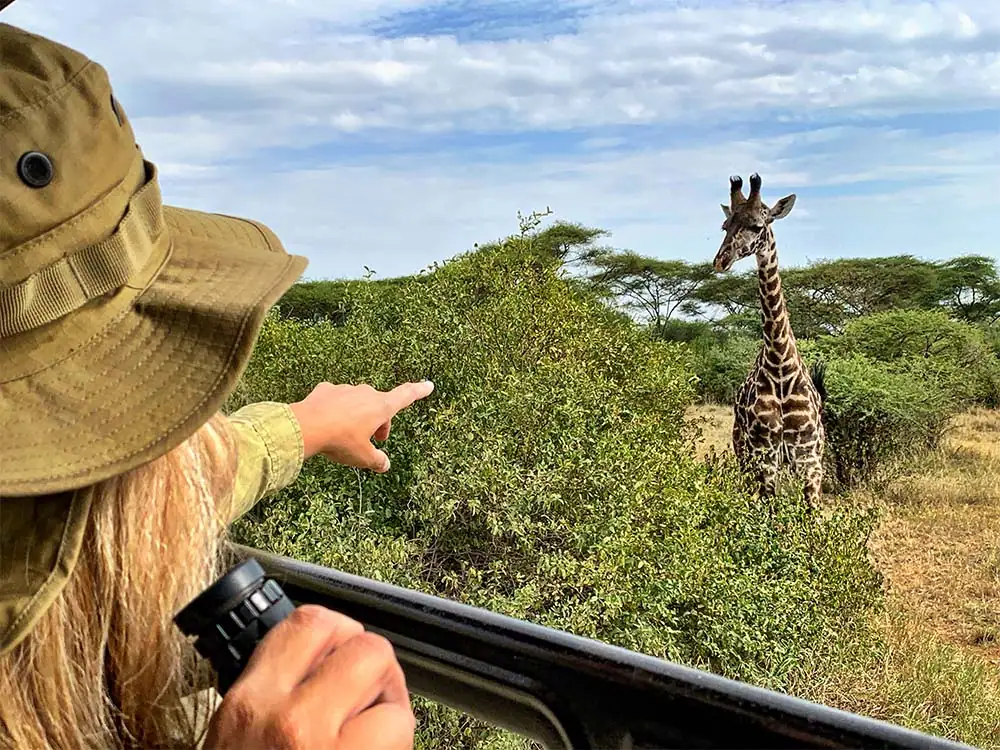
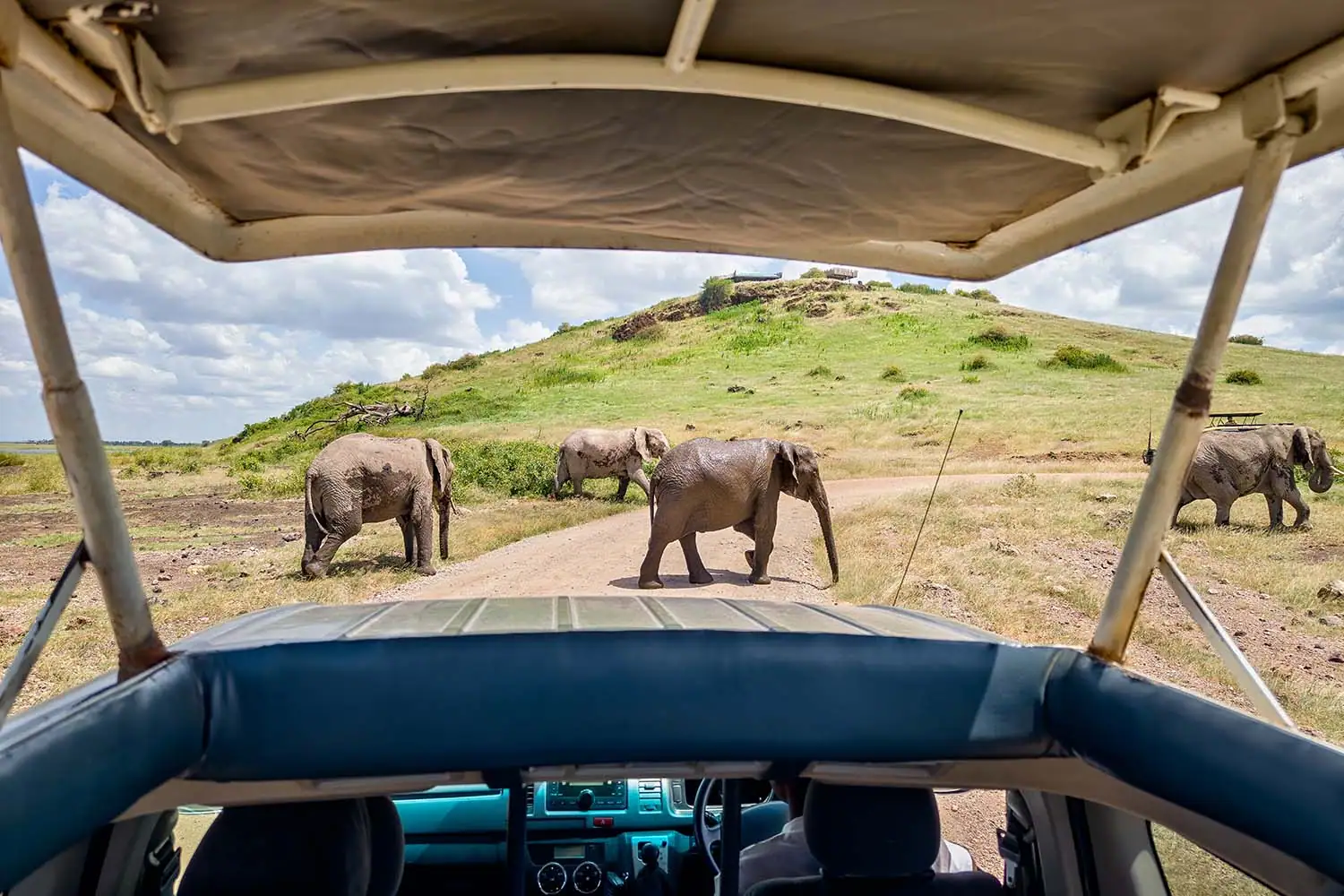
Yes. The roof lifts so you can stand up for an all-round view and photography while staying in the shade.
For travel between June and October, or over Christmas and New Year, we recommend booking six to nine months ahead — the most romantic camps have only a few tents. Outside peak season, two to three months is usually enough.
Yes. Our vehicles have USB charging points, so you can top up phones and camera batteries between sightings.
Every honeymoon is tailor-made, so the cost depends on your dates, the number of days and the style of accommodation. Share your wishes with us and a safari specialist will send a personal, itemised quote.
Each vehicle is serviced and checked before every safari and inspected by your guide every morning. All carry a first-aid kit, fire extinguisher, spare wheel, recovery equipment and two-way radio, and every seat has a seat belt.
No questions match — ask our guides directly.
Message a guide on WhatsApp or send us your dates — we reply personally.
+255 767 995 682+254 724 276 055+43 664 111 4939info@offwegosafaris.com
Or message a guide directly on WhatsApp